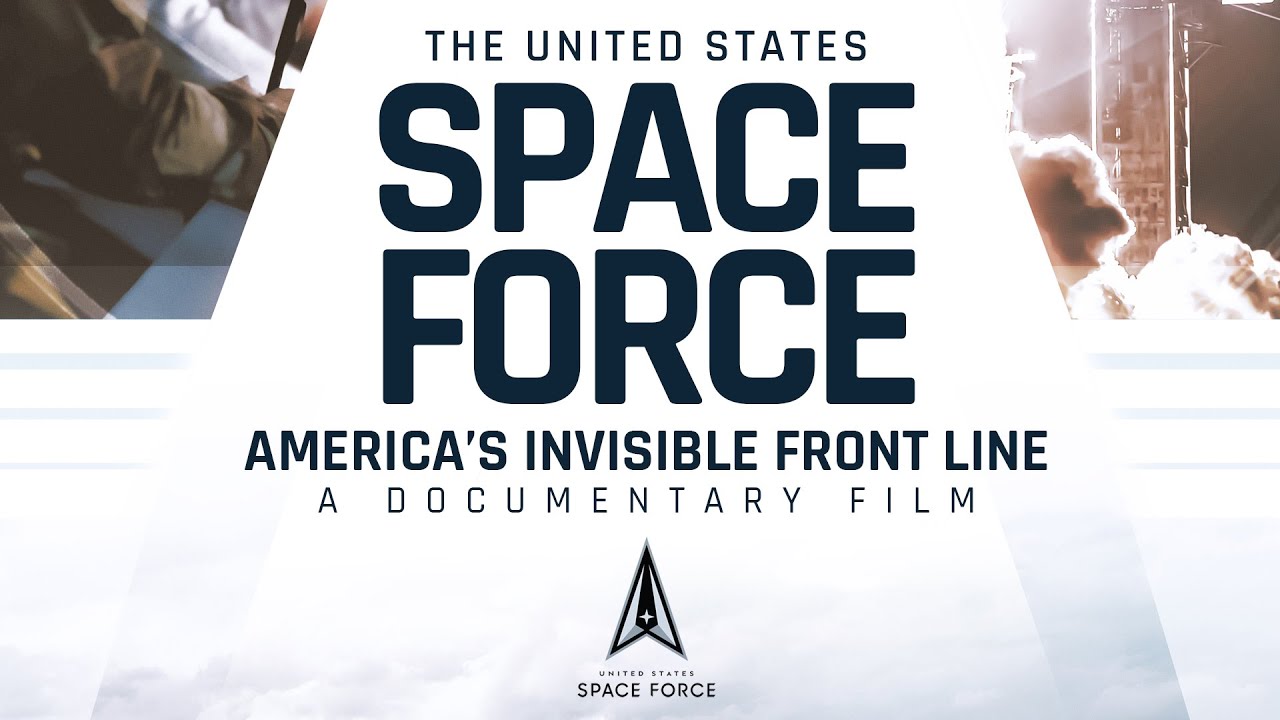
There’s a warfighting domain most Americans never think about — until it stops working. A new 20-minute documentary from the Pentagon, “The U.S. Space Force — America’s Invisible Front Line,” makes the case that space has quietly become the foundation of modern life, modern war, and the modern economy — and that defending it is now a full-time military job.
A film with a mission
The documentary was produced by Air Force Television Pentagon and released in May 2025. It runs just under 21 minutes and walks through what the Space Force is, where it operates, and who serves in it. The film got a high-profile debut: Guardians screened it for members of Congress at the U.S. Capitol Visitor Center, with a blunt message for lawmakers — military space capabilities need continued investment and resourcing.
That screening wasn’t ceremonial. It was a pitch. The film’s core argument is that space superiority — the ability to use space while denying it to adversaries — is now as fundamental as air superiority was to the last century’s wars.
Why space is the invisible front line
Start with your own day. GPS timing synchronizes power grids, banking networks, and cell towers. Weather satellites track the storms headed for your city. Communications satellites carry everything from airline Wi-Fi to military orders. The documentary’s opening chapters hammer this home: the average American touches space infrastructure dozens of times daily without knowing it.
Then scale that up to the battlefield. Modern warfare runs on space — missile warning, encrypted communications, navigation for precision weapons, intelligence from overhead. Lose access to orbit in a conflict and the joint force goes dark, deaf, and blind. That dependency is exactly what the film wants viewers, and Congress, to grasp.
The threats are real
Space is no longer a sanctuary. Adversaries have spent two decades building the tools to take satellites down or take them offline: direct-ascent anti-satellite missiles, co-orbital “inspector” satellites that sidle up to other nations’ spacecraft, ground-based lasers, and electronic jamming that can mute GPS over a battlefield.
Chief of Space Operations Gen. Chance Saltzman puts it plainly in the film’s orbit: the space domain has fundamentally changed, it is now a contested warfighting domain, and space superiority is no longer a luxury but a necessity. The documentary devotes a full chapter to this “war for space dominance” — and to what losing it would cost.
What the Space Force actually does
The film tours the service’s mission areas: space control (protecting friendly satellites and deterring attacks), global mission operations (missile warning, weather, communications), and space access and space lift (getting payloads off the planet). These aren’t abstract concepts — they’re run by Guardians at bases and stations around the world, around the clock.
It also traces how fast the capability is evolving. The Space Force was established on December 20, 2019 — the first new branch of the U.S. armed forces in 73 years. Saltzman describes building “entirely new capabilities” for 21st-century space, demanding a new mindset, combat readiness, and deep partnerships with industry and allies.
Why watch it
At 20 minutes, the film is a briefing disguised as a documentary — and that’s the point. Whether you buy every argument or not, it’s the clearest public statement of how the Pentagon sees the orbital battlefield right now: crowded, contested, and critical. For anyone who follows defense and space, it’s 20 minutes well spent.
The message for Congress
The documentary’s journey to Capitol Hill says as much as its content. At the April 30 screening in the U.S. Capitol Visitor Center, Guardians walked lawmakers through the film’s argument in person: that space underpins daily life, economic stability, and national defense — and that adversaries are actively building the means to take it away.
Saltzman’s framing is worth quoting directly: “We’re building entirely new capabilities to meet the unique challenges of 21st-century space. This requires a new mindset, a commitment to change, and prioritizing combat readiness, Guardian development, and strong partnerships.” Translation: the Space Force doesn’t want to fight the last war’s space battle. It’s trying to invent the next one’s deterrent — and it needs the budget to do it.
Inside the 20 minutes
The film is tightly structured. It opens with the stakes — what happens in orbit and why it matters — then moves briskly through the economics of space, space’s effect on the modern battlefield, and the evolution of American space capabilities. The back half is a tour of the mission areas themselves: space control, global mission operations, space access, and space lift.
It’s a lot of ground in 21 minutes, but the pacing is deliberate: every section answers the same question from a different angle — what does space do for you, and what happens if someone takes it away?
Source: U.S. Space Force / DVIDS. Watch the documentary above.