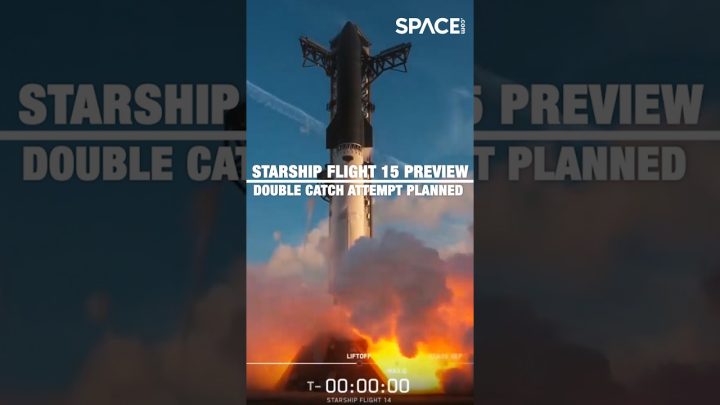
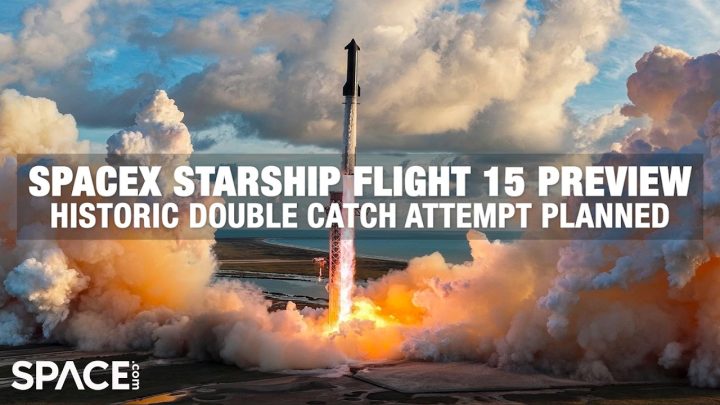
On the morning of September 28, 2026, the world’s most powerful rocket did something it had never done before: it went to orbit — and came back. SpaceX’s Starship Flight 14 lifted off from Starbase, Texas, at 7:48 a.m. Central Time, reached low-Earth orbit, deployed 26 working satellites, and returned both stages to Earth. After thirteen test flights that never quite got there, Starship is now an orbital launch system.
Liftoff: the morning everything changed
Thirty-three Raptor engines lit on the Super Heavy booster and the 407-foot stack climbed away from South Texas on a pillar of fire. About twenty-five minutes later, the upper stage — Ship — completed its orbital-insertion burn and settled into low-Earth orbit roughly 275 kilometers up. For a program that began flying in 2023, it was the milestone everything had been building toward.
The National Space Society, which has championed the program for years, called it exactly what it was: the moment Starship proved it could launch payloads and return under control — the two halves of the reusability promise.
An engine out — press on
It wasn’t clean. Shortly after the Ship separated from its booster, one of its six Raptor engines shut down early. In mission control, flight controllers ran the numbers and briefly considered aborting the orbital attempt — the conservative call, and on an earlier flight, probably the call they’d have made.
This time they pressed on. The remaining five engines had the margin, the trajectory was good, and Ship made orbit anyway. SpaceX’s COO later framed it as the program working as designed: find the edges, learn, keep flying. “Although not totally nominal,” as the NSS put it, the flight proved the system’s resilience as well as its power.
Twenty-six satellites, ten Falcons in one
The payload was the real headline for the space industry: 26 operational third-generation Starlink satellites — the first working payloads Starship has ever deployed. SpaceX noted that this single launch put up the bandwidth equivalent of about ten Falcon 9 launches’ worth of smaller Starlink satellites.
That’s the V3 advantage. The new, heavier, far more capable Starlink V3 spacecraft can only fly on Starship — they don’t fit in a Falcon 9 fairing. One Starship flight doing the work of ten Falcons is the economic argument for the giant rocket in a single number, and it’s why revenue-generating Starlink flights will now help fund the rest of the test program.
Coming home early
The plan had called for Ship to circle Earth about six times over nearly ten hours before deorbiting over the Pacific west of Chile. Instead, controllers brought it home early: Ship reentered over the northern Pacific and splashed down about three hours after liftoff — roughly 11:58 a.m. Eastern — cutting the mission short by nearly seven hours.
The Super Heavy booster, meanwhile, relit most of its engines and made a controlled splashdown in the Gulf of Mexico. Future flights are expected to bring the booster back to the launch pad for a catch by the Mechazilla arms. A demanding reentry, two ocean landings, one orbital deployment: with the exception of the shortened duration, SpaceX hit every objective it set.
What it means
Flight 14 moves Starship from experiment to workhorse. Fully operational, the system is designed to put more than 100 metric tons into low-Earth orbit — and to do it again, and again, with both stages reused. Next up on the manifest: orbital refueling tests, a role in the Artemis 3 lunar lander demonstration targeted for 2027, and eventually, the Moon and Mars.
As the NSS’s CEO put it, developing capabilities at this scale is rarely a straight line. But after Flight 14, the line points unmistakably up — and into orbit.
What the cameras caught
The NASASpaceflight video is worth watching for the sensory overload alone. Epic tracking cameras follow the 33-engine ascent in stunning clarity, capture the hot-staging separation as Ship pulls away from Super Heavy, and then — the money shots — the long fall home: Ship glowing through reentry plasma over the Pacific, a controlled tumble through the upper atmosphere, and the final splashdown.
It’s the most complete visual record of an orbital Starship flight ever assembled. For a vehicle designed to fly hundreds of times, this footage is the “before” picture — the slightly scorched, slightly shortened, completely historic first of its kind.