SpaceX launched the most ambitious Starship test flight yet on Friday, November 13, and by Saturday morning the mission had split cleanly in two. The Super Heavy booster was lost in the Gulf of Mexico after it abandoned its planned tower catch, while the Starship upper stage reached orbit, deployed all 26 of its Starlink satellites, and settled in for a day-long coast toward a recovery attempt no Starship has ever tried. Flight 15 lifted off from Orbital Launch Pad 2 at Starbase, Texas, at 4:47 p.m. Central time, 5:47 p.m. Eastern, after the Federal Aviation Administration issued the updated launch license the mission needed late on Friday. The vehicle that climbed away was the new Version 3 stack, Booster 22 below and Ship 42 on top, standing roughly 407 feet tall.
Its flight plan was the boldest SpaceX has ever filed: bring both stages home to the same pad and catch both of them with the tower. No previous Starship flight had attempted to recover the full vehicle. Flight 15 was meant to be the first.
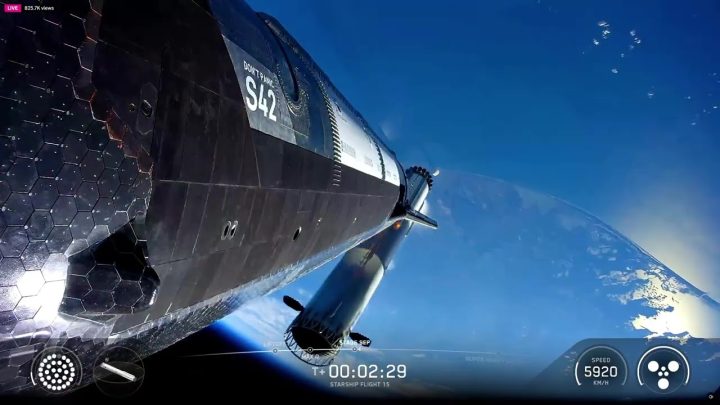
The ascent itself gave SpaceX almost everything it asked for. Ship 42 ignited all six of its Raptor engines at hot staging, separated cleanly, and was given a go for an orbital insertion burn about 26 minutes into the flight, using a single centre Raptor fed from its header tanks. That burn put a Starship upper stage into orbit for only the second time in the programme’s history. Beginning roughly 35 minutes after liftoff, the ship opened its payload door and released 26 Starlink Version 3 satellites one by one, with deployment running for more than 40 minutes until SpaceX confirmed the full set was away. The satellites were released at an altitude of about 275 kilometres, and cameras aboard the ship returned striking views of them drifting off into orbit.
Why Booster 22 Never Came Home
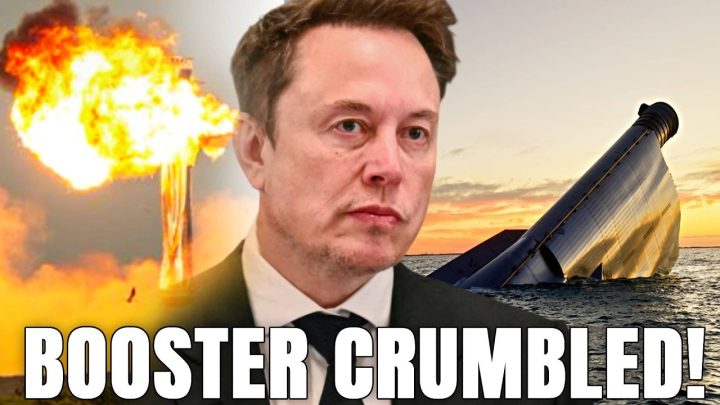
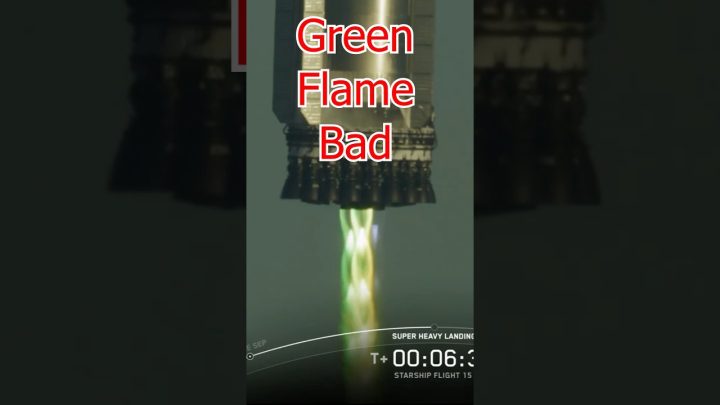
Booster 22 was supposed to be back at Pad 2 about six and a half minutes after it left it. It fired a boostback burn of roughly 41 seconds to bend its trajectory back toward Starbase, and early in the return it was still cleared for the catch. In the later stages of its coast, however, the booster detected a problem in its own guidance, navigation and control system and aborted the attempt by itself. SpaceX commentator Dan Huot explained the sequence in an in-flight update nearly seven hours into the mission: the vehicle had initially been go for a catch, but the guidance issue it flagged put it into its contingency landing offshore instead. The booster diverted, hovered, shut down its engines, and its flight termination system activated before it splashed down in the Gulf, where it exploded and briefly rose back out of the sea as remaining propellants burned off.
SpaceX has not yet said what specifically triggered the guidance abort, and its engineers are reviewing the booster’s telemetry to find out. That distinction matters, because the loss was a safety system working as designed rather than a booster falling out of the sky: the vehicle recognised it could not be caught safely and took itself somewhere it could hurt no one. Even so, the result underlines how much work the Version 3 booster still has ahead of it. Three earlier Super Heavy boosters have been caught by the launch tower’s arms, but no Version 3 booster has yet made a successful return. Until one does, the fully reusable system SpaceX is selling to NASA and to its own Starlink business remains only half proven.
Ship 42 Is Still Flying — and the Hard Part Is Still to Come
While the booster was being written off, Ship 42 was quietly flying what SpaceX called a perfect mission. Huot reported that the ship’s heat shield remained in good condition after ascent and orbital insertion, a detail the whole second half of the flight depends on. After satellite deployment the ship entered a long coast of up to 14 orbits, lasting about 22 and a half hours in total. Along the way it has been passing a series of contingency checkpoints at which controllers can still wave off the return and send it to a backup splashdown, including zones in the Gulf and in the South Pacific off Chile. It cleared its first two checkpoints, with the third and final go-or-no-go decision due about 20 hours and 41 minutes into the flight.
If that final check is green, Ship 42 will fire a short deorbit burn, re-enter the atmosphere at about 22 hours and 11 minutes into the mission, and steer itself back over the Gulf toward Starbase. It will fly its banking manoeuvre, tip into the bellyflop, light its landing burn above the tower, and try to settle into the same chopstick arms that were meant to catch its booster the day before. The attempt is scheduled for about 3:20 p.m. Central time, 4:20 p.m. Eastern, on Saturday afternoon. No orbital Starship upper stage has ever been caught, and no upper stage has ever come back to its launch site after a full day in orbit.
Whatever happens in those final minutes, Flight 15 has already delivered its payload, proved the Version 3 ship in orbit, and shown that its booster knows how to fail safely. The catch attempt will decide whether it also makes history.
Credit: SpaceX | edited by Space.com