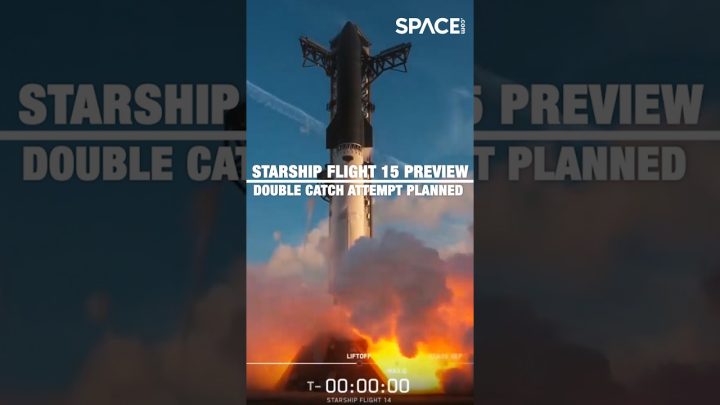
SpaceX is about to attempt something no rocket company has ever pulled off: bringing an entire orbital launch system home. On Friday, November 13, Starship Flight 15 is scheduled to lift off from Starbase, Texas, and if the flight goes to plan, both halves of the vehicle — the Super Heavy booster and the Starship upper stage — will be caught out of the air by the launch tower’s chopstick arms. A successful double catch would mark the first full recovery of an orbital rocket and its spacecraft.
A Launch Window on Friday Evening
Liftoff is targeted for Friday, November 13, at 5:45 p.m. EST, which is 4:45 p.m. local time at Starbase. The launch window runs 75 minutes, closing at 7:00 p.m. EST, and SpaceX has said there is a chance of a later liftoff time inside that window. The company has not announced any official backup days, so a scrub on Friday would leave the next attempt an open question.
The vehicle is the fourth flight of the Starship V3 configuration and the fifteenth test flight of the program overall. SpaceX has already test-fired the engines of both Flight 15 vehicles, and on November 10 the Super Heavy booster, Booster 22, was rolled to the pad for stacking. It will be the second Starship flight to deploy satellites into a stable low Earth orbit, carrying 26 Starlink V3 satellites that are scheduled to be released in the first 90 minutes of flight.
The Booster Catch: Proven, but Never Routine
About six and a half minutes after liftoff, Booster 22 is set to arc back toward Starbase and descend into the tower’s mechanical arms. SpaceX has caught a Super Heavy booster three times before, so the maneuver itself is proven — but it remains one of the most demanding feats in rocketry, guiding a 33-engine first stage, 230 feet tall, back to a precise hover beside the tower that launched it minutes earlier.
The booster catch is only half the gamble, though. On every previous flight, it was the end of the recovery story. The Ship kept flying, and its flight ended in the ocean. Flight 15 is built around changing that ending.
The Ship Catch: A First Attempt
If the booster catch grabs the headlines on Friday evening, the Ship catch is the moment history will be watching on Saturday afternoon. After deploying its Starlink satellites, the Starship upper stage will remain in orbit for just over 22 and a half hours, completing about 14 orbits at roughly 275 kilometers altitude. Then, on Saturday, November 14, it is scheduled to return to Starbase for the first-ever attempt to catch a returning orbital spacecraft with the tower arms.
If Flight 15 lifts off at the start of its window, the Ship’s return is targeted for about 4:17 p.m. EST on Saturday; a liftoff at the end of the window would push the return to about 5:32 p.m. EST. Either way, it sets up a second, separate spectacle a day after the launch itself.
The Catch Is Conditional
SpaceX is being careful not to promise the Ship catch outright. Starship will only attempt a return to the launch site if the flight control team confirms that the vehicle systems critical for the reentry maneuvers, the final landing burn, and the tower approach are all healthy. If anything is amiss, the attempt will be called off.
Backup splashdown zones have been designated off Hawaii, off Chile, and in the Gulf of Mexico. Those zones matter because Flight 14 showed how quickly a plan can change: that flight, on September 28, was Starship’s first orbital flight, but it ended early after about three hours and two orbits with a splashdown in the Pacific.
Why This Flight Matters
Full reusability has always been the point of Starship. Falcon 9 transformed the industry by recovering its first stage while still expending the upper stage on every flight. Starship is designed to close that last gap: catch the booster, catch the ship, and fly the whole system again. A double catch on Flight 15 would be the first demonstration that the complete architecture can come home in one piece.
It would also be a milestone for the Starlink program. Flight 15 is only the second Starship mission to deliver satellites into a stable orbit, and the 26 Starlink V3 spacecraft aboard are the larger, more capable generation the constellation’s next phase depends on.
How to Watch
Coverage of the launch is expected to begin about 30 minutes before liftoff, at roughly 5:15 p.m. EST on Friday. SPACE 24 LIVE’s launch tracker will follow the countdown, the booster catch on Friday evening, and — if the flight stays on plan — the Ship’s return and first catch attempt on Saturday afternoon. Two days, two catches, and a shot at making orbital history.
Source: Space.com live coverage of Starship Flight 15.