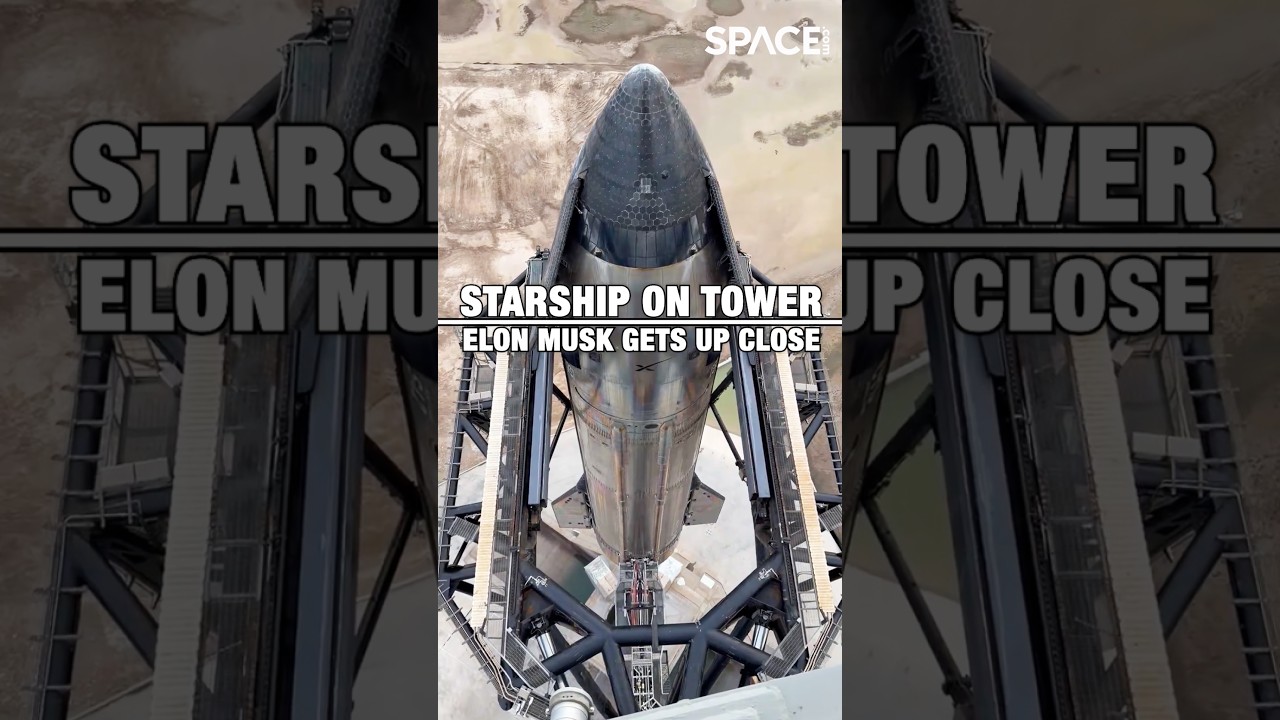
SpaceX has done something no one had ever done before. On Saturday afternoon, November 14, 2026, the company brought a Starship upper stage back from orbit and caught it in the arms of the launch tower it had left the day before. Ship 42 had spent almost a full day in space, circled the Earth about fourteen times, and delivered twenty-six Starlink satellites before it came home. The tower’s two steel arms, the ones SpaceX calls Mechazilla’s chopsticks, closed around the ship and held it. It was the first time an orbital upper stage had ever been caught by its launch tower.
Flight 15 was the first flight of the new Block 3, or V3, version of the vehicle. The stack that lifted off from Pad 2 at Starbase, Texas, on Friday, November 13, at 4:47 p.m. Central Time paired Super Heavy Booster 22 with Ship 42, and the plan called for two catches: the booster back at the tower minutes after launch, and the ship the next day. Only one of those catches happened, but it was the harder of the two. A booster separates within minutes and comes straight back, while a ship has to survive a full orbital flight and a fiery re-entry before it can even attempt the return.
A flight that lasted almost a full day
The launch itself went as planned. Booster 22 lifted the stack away from Pad 2, the stages separated, and Ship 42 fired its engines for the orbital insertion burn, becoming only the second Starship upper stage ever to reach orbit. Once in orbit, the ship deployed all twenty-six of its Starlink V3 satellites over about forty minutes, then settled in for the long coast that made this flight different from every Starship flight before it. Previous ships had come home within an hour or two, if they came home at all. Ship 42 stayed up for more than twenty-two hours, completing about fourteen orbits while flight controllers worked through a series of contingency checkpoints.
That long coast was the point of the flight as much as the catch itself. SpaceX needed to prove that a Starship could keep its cryogenic propellant cold and ready after a full day in space, relight its Raptor engines on command after hours of silence, and bring its heat shield through the hardest part of the trip in good shape. The ship relit a single Raptor engine more than once, and by the final go or no-go decision its heat shield was reported to be in good condition. A spacecraft that can loiter in orbit for a day can deploy satellites, wait for a rendezvous, or position itself for a trip to the Moon or Mars, and this flight is the first real evidence that the V3 ship can do that.
The booster that did not come home
The flight was not a clean sweep, and the missing half of the plan deserves to be stated plainly. Booster 22 was supposed to return to the tower minutes after launch, in the first catch attempt for a V3 booster, but it never got the chance. SpaceX said the booster’s boostback burn ended early, with preliminary indications pointing to a low fuel mass warning, and the vehicle diverted away from the pad toward the Gulf of Mexico. It completed a landing burn and hovered over the water before its flight termination system was triggered as the engines shut down, and the booster was lost. The underlying cause remained under investigation, and SpaceX has not specified a final trigger beyond the early low-fuel indication.
That loss stings, but it should be kept in proportion. SpaceX had already caught Super Heavy boosters three times on earlier flights, all of them the older V1 version, so the booster catch is proven even though no V3 booster has been caught yet. The booster failure also did not affect the ship, which flew its full mission and came home on schedule. A programme that loses a booster on Friday and catches a ship from orbit on Saturday is learning in public, at a pace no other rocket developer is matching, and the booster investigation will feed directly into the next flight.
The catch itself
The return began with a short burn of a single Raptor engine, lasting roughly ten seconds, over the Pacific Ocean. That burn took just enough energy out of the ship’s orbit to put it on a path back into the atmosphere, where its heat shield of about eighteen thousand ceramic tiles took the brunt of the re-entry heating. The ship flew back toward the Texas coast, made a final swing out over the Gulf of Mexico, and lit three Raptor engines for its landing flip. It slowed to a hover beside the tower, and the arms closed around the load-bearing fittings on the vehicle’s sides. SpaceX posted “Mechazilla catches Starship!” at about 3:21 p.m. Central Time, about twenty-two hours and thirty-two minutes after liftoff.
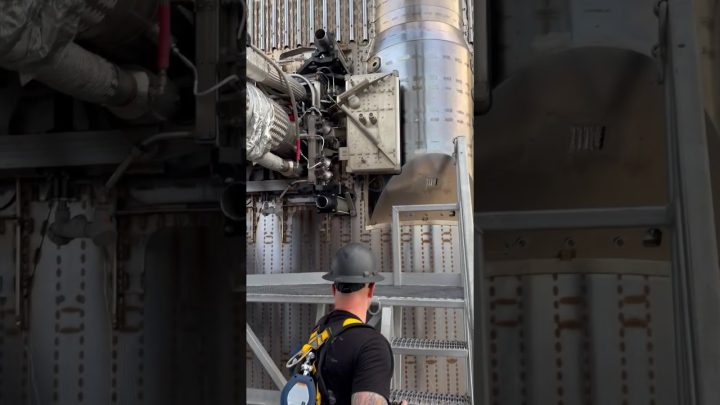
The timing is what makes this catch different from the booster catches that came before it. A booster catch is a sprint, over within minutes of launch, while a ship catch is a marathon: the vehicle has been to orbit, deployed its payload, and survived re-entry, and it still has to arrive at the tower at exactly the right speed and angle after a day in space. The tower cannot rescue a spacecraft that arrives too fast or in the wrong place, so the catch is really a verdict on everything that came before it. Elon Musk later posted video of himself inspecting the ship after the capture, a quiet coda to a very loud achievement.
Why the catch matters
SpaceX has chased this milestone because it is the piece that makes Starship fully and rapidly reusable. Catching the booster was a breakthrough, but a reusable booster with an expendable ship is still only half a reusable rocket. Catching the ship means both stages can, in principle, be inspected, refuelled, and flown again, and that is the arithmetic that makes Starship cheap enough to fly often and big enough for the lunar and Mars missions planned around it.
What comes next is Flight 16, which has not yet been announced, and the question of how quickly SpaceX can repeat what it has just done. One catch is a demonstration; a second and a third would make it a routine, and the company will inspect Ship 42 closely before deciding how much of the vehicle can fly again. The flight also feeds into SpaceX’s plans in Florida, where a second Starship site is being built with the same tower-catch system. The week’s other stories, a Falcon 9 launching USSF-627, Rocket Lab’s one hundredth Electron mission, ESCAPADE heading toward Mars, and NASA’s latest lunar plans, were all covered in the video above. But this week will be remembered for one line: after fourteen orbits and almost a full day in space, a spacecraft came home and was caught by the tower it launched from.