When astronomers spotted a newly discovered asteroid on a potentially dangerous trajectory, Earth’s global planetary defense network faced its most serious real-world test. What followed was a high-stakes race against time — and a powerful demonstration that humanity is no longer helpless against threats from space.
The Discovery
It starts the same way every time: a faint dot of light moving against the fixed stars. Automated sky surveys — scanning the heavens night after night — flag the object. Follow-up observations confirm it’s real. Then comes the critical question: where is it going?
Initial orbital calculations are always uncertain. With only a few days of observations, an asteroid’s future path is a wide cone of possibilities, and Earth sits somewhere inside that cone. The uncertainty is terrifying — and it’s where planetary defense begins.
The Global Response
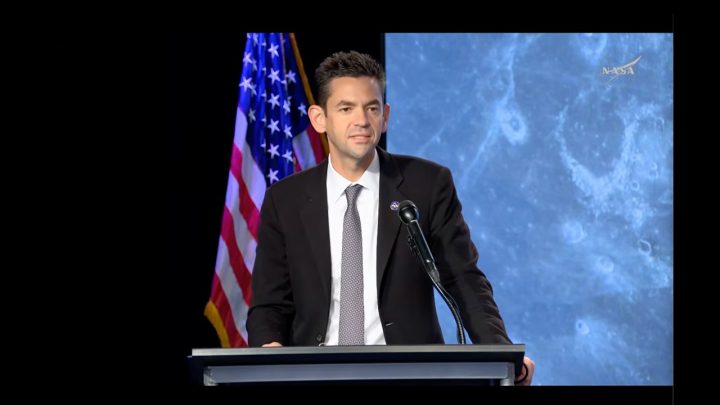
What happened next is the real story. NASA’s Planetary Defense Coordination Office sprang into action, but they didn’t work alone. Observatories around the world — professional and amateur — turned their telescopes toward the threatening object. Each new observation narrowed the cone of uncertainty.
International partners shared data in real time. Radar facilities bounced signals off the asteroid to measure its distance and velocity with extraordinary precision. Spectroscopic observations revealed its composition — critical for understanding how it might respond to a deflection attempt.
This is planetary defense as it’s supposed to work: not a single hero with a single telescope, but a global network of scientists, engineers, and institutions coordinating across borders and time zones.
Calculating the Odds
As observations accumulated, the impact probability was refined — rising at first, as often happens, then falling as the orbit became clearer. This is the emotional rollercoaster of planetary defense: the terrifying weeks when the numbers climb, followed by the relief when they drop to zero.
Eventually, the asteroid was retired from the risk list. Its orbit was determined precisely enough to rule out an Earth impact for the foreseeable future. The crisis was over — this time.
Why It Matters
Every real-world scare makes the system better. The DART mission in 2022 proved we can alter an asteroid’s trajectory by slamming a spacecraft into it. But DART was a controlled test against a harmless target. A genuine threat — with uncertain orbit, unknown composition, and a ticking clock — is infinitely harder.
The “Planetary Defenders” episode that documented this event isn’t just good television. It’s a field report from the front lines of humanity’s longest-term security project. The dinosaurs didn’t have a space program. We do.
The next asteroid might not miss. When it comes, the network tested in this near-miss will be what stands between civilization and catastrophe. This was not an exercise — and that’s exactly the point.
Space24Live aggregates space news and videos. Views and claims in source material belong to their respective publishers. Learn more about NASA’s efforts to find, track and monitor near-Earth asteroids.